
By Resurgent Financial Advisors
Few things test a person’s confidence like a rough market. A calm plan can suddenly feel shaky when headlines turn dramatic, portfolio values move fast, and every financial commentator sounds like they’re narrating the end of civilization before lunch. Even thoughtful, disciplined investors can feel their stomach drop during periods like this. Fear is not a sign of weakness. Fear is a sign that money matters, goals matter, and uncertainty rarely feels fun in real time.
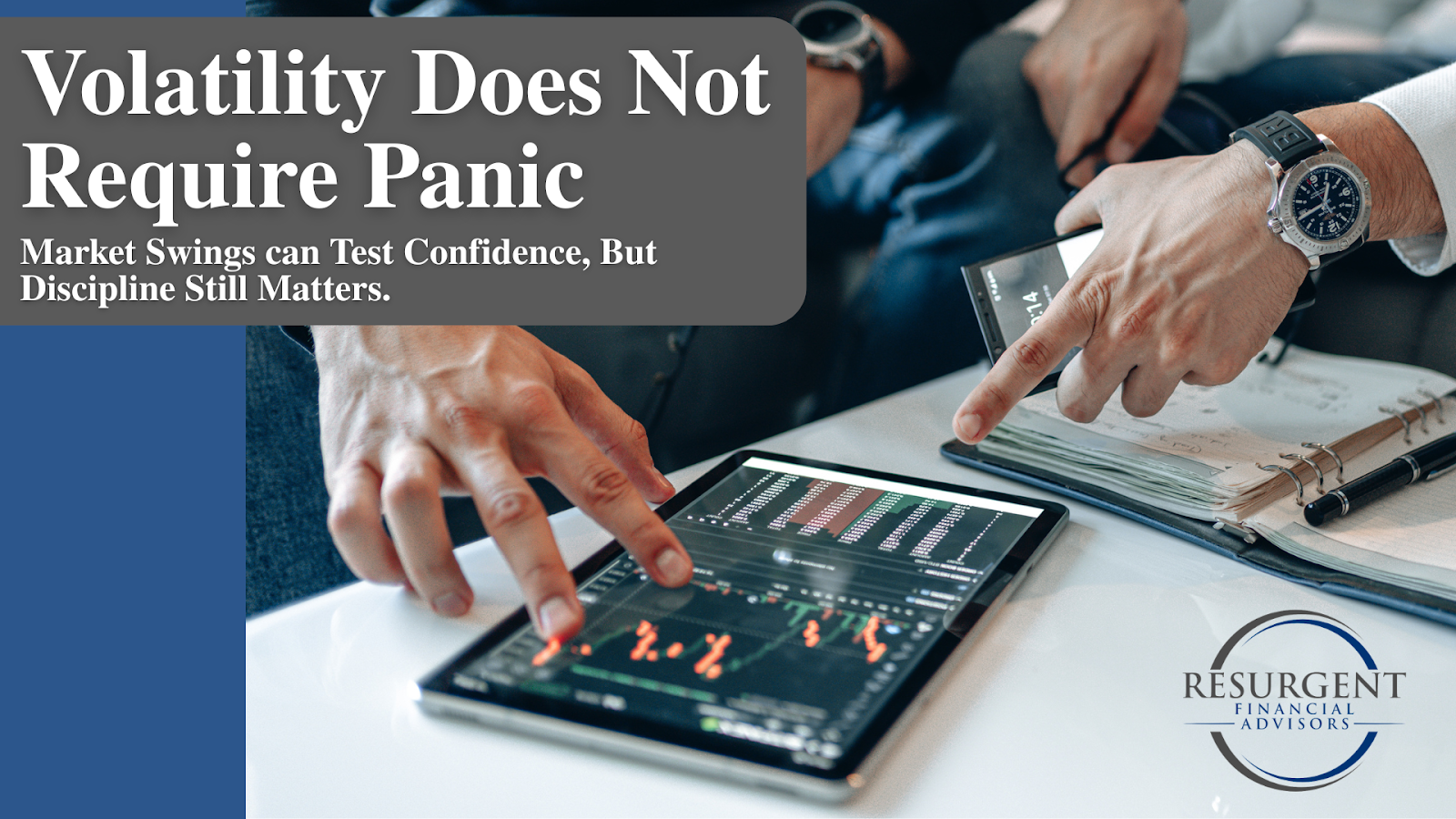
Market volatility is a normal part of investing. FINRA defines volatility as the up and down movement in market indexes and security prices, and notes that more dramatic swings generally mean higher volatility and greater potential risk. Recent FINRA investor guidance also notes that volatile markets often stir fear and anxiety, which is exactly why major decisions made in those moments deserve extra care.
A smarter approach starts with one reassuring truth: not every market move requires a response. Motion and meaning are not the same thing. Plenty of activity in the market is just that, activity. Real planning begins when emotion steps out of the driver’s seat and judgment gets back behind the wheel.
Market Volatility Feels Personal for a Reason
Money is never just math. Money holds plans, responsibilities, memories, and a surprising amount of identity. A market drop can feel like a threat to all of that at once. That emotional reaction is incredibly common, and pretending otherwise usually makes things worse. White-knuckling the experience does not count as a strategy.
Smarter decisions usually begin with acknowledging what is happening internally before changing anything externally. A pause can be productive. A moment of discomfort does not always call for immediate action. Many poor financial decisions are not the result of bad intelligence. They are the result of urgency, noise, and the very human urge to make uncertainty go away as fast as possible.
SEC investor education guidance encourages people to stay calm and stick to a plan during volatility, noting that a plan built around long-term goals, risk tolerance, and a diversified mix of assets may better prepare investors for inevitable market changes. That idea may not feel exciting, though it has the advantage of often being true. Exciting and helpful are not always roommates.
Start With the One Question That Matters Most
A useful first question is not, “What is the market doing today?” The more helpful question is, “Has anything changed about my goals, timeline, or need for this money?”
That distinction matters. A scary week in the market does not automatically change a good plan. A major life event might. Job loss, a large purchase, a business transition, a health issue, or a family obligation can change the role your money needs to play. Most market headlines do not.
Investor.gov explains that asset allocation is personal and should reflect time horizon and risk tolerance. That means smarter decisions during volatility are usually anchored in the purpose of the money, not in the mood of the market. Funds needed soon may call for a different approach than money earmarked for long-term growth. Money without a clear time horizon tends to invite emotional decision-making, which is rarely where good planning does its best work.
Separate Short-Term Cash From Long-Term Investments
One of the most practical things a household can do during volatile periods is to separate near-term cash needs from long-term invested assets. That one distinction can reduce a tremendous amount of stress.
The CFPB defines an emergency fund as cash set aside for unplanned expenses or financial emergencies such as home repairs, medical bills, or a loss of income. The agency also notes that even relatively small savings can provide meaningful financial security when unexpected costs show up. Cash reserves matter in part because they can help keep a short-term problem from becoming a long-term investment mistake.
A person who knows next month’s obligations are covered tends to think more clearly than someone staring at a market decline while also wondering how to pay for a surprise expense. That is not a character flaw. That is how pressure works. Smarter financial decisions often become easier when cash flow is stable enough to create a little breathing room.
A healthy cash reserve is not an argument for avoiding investing altogether. An oversized pile of idle cash can create its own problems over time. The real point is balance. Short-term needs and long-term goals should not be forced into the same bucket and then expected to behave nicely.
Revisit Your Time Horizon and Risk Tolerance
Market volatility has a way of exposing a mismatch between what looked reasonable in theory and what feels tolerable in practice. That can be useful information.
Investor.gov describes risk tolerance as the answer to a practical question: when will the money be needed, what are the goals, and will the investor be able to sleep at night with a risky investment that could lose principal. That last part tends to get people’s attention, and for good reason. A portfolio that looks fine in a quiet market can suddenly feel far more aggressive when values are moving in the wrong direction.
A fresh look at risk tolerance does not mean rewriting the whole plan after every unsettling headline. It may mean confirming that the plan still fits. It may also mean admitting that a portfolio built for bravado is not a portfolio built for reality. Plenty of investors discover, often with excellent timing and terrible feelings, that their true comfort level was lower than they thought. Humility can be expensive, though it is still cheaper than repeated panic decisions.
Check Allocation Before Checking Headlines
Headlines are loud. Asset allocation is quieter. Quiet wins more often than people expect.
Investor.gov explains that asset allocation involves dividing investments among categories such as stocks, bonds, and cash, while diversification means spreading money among different investments to reduce risk. FINRA makes the same point in slightly different language, noting that diversification across and within asset classes, along with rebalancing, are important tools for managing investment risk.
That framework matters during volatile markets because a good decision is often less about finding the perfect prediction and more about checking whether the portfolio is still aligned with the role it is supposed to play. A concentrated position that once felt manageable may deserve a second look. A portfolio that drifted heavily toward one area after years of gains may now carry more risk than intended. Allocation issues are not always obvious in good markets. Choppier periods tend to reveal them with much less tact.
Rebalance Instead of Reacting
Reaction is emotional. Rebalancing is intentional. Those are not the same thing.
Investor.gov defines rebalancing as bringing a portfolio back to its original asset allocation mix when market movements cause holdings to drift out of alignment with investment goals. That may sound simple, and in concept it is. In practice, it can require discipline, since rebalancing often means trimming areas that have recently done well and adding to areas that have lagged.
That discipline is exactly why rebalancing can be so useful during periods of volatility. A reactive investor tends to chase what feels safe after prices have already moved. A disciplined investor is more likely to return to a target mix based on goals and risk, not recent drama. Rebalancing is not a guarantee against loss, and it does not eliminate risk. What it can do is restore order when emotions and market movements are both trying to turn a plan into improvisation.
Create a Personal Decision Filter
Most people do better with a simple decision filter than with a hundred market opinions.
A practical filter might sound like this: Has my goal changed? Has my timeline changed? Has my need for liquidity changed? Has my risk tolerance changed in a durable way, not just in a stressful week? Does this move improve my plan, or just relieve my anxiety for an afternoon?
Questions like those can create a valuable pause between feeling and action. That pause matters. FINRA’s investor education materials caution people to educate themselves, understand what they own, learn about diversification, and avoid hunches and hot tips. Smart financial decisions are rarely built on adrenaline.
A written process can help here. Fancy language is not required. A few clear standards can do the job. Clarity often beats complexity, especially when markets are behaving like they had too much coffee.
Keep Perspective When the Noise Gets Loud
Volatility can create the illusion that every decision is urgent and every headline is actionable. Most of the time, neither is true.
FINRA notes that market swings can happen for many reasons, including inflation fears, political developments, economic optimism or pessimism, trade concerns, and global events. That long list is a good reminder that no one controls the market’s daily mood. A household can control planning, savings habits, risk exposure, and decision discipline. Control is smaller than prediction, though it is far more useful.
Perspective does not mean indifference. Serious planning pays attention. Serious planning simply avoids confusing awareness with overreaction. Some days the wisest move is a portfolio adjustment. Some days the wisest move is turning off the market commentary and going for a walk before making things worse with a very confident, very emotional click.
When a Second Opinion Helps
Market volatility can expose blind spots, especially when family responsibilities, taxes, concentrated stock positions, business interests, or major upcoming expenses are all in the mix. A second opinion can be useful when the stakes are high and emotions are doing push-ups in the background.
A good conversation should bring structure, not pressure. Current SEC marketing guidance emphasizes that adviser communications should avoid untrue or unsubstantiated claims and should present material risks and limitations in a fair and balanced manner. That is a healthy standard for financial discussions generally. Smart guidance should help a person see trade-offs more clearly, not simply feel reassured in the moment.
What Smarter Decisions Usually Look Like
Smarter financial decisions during market volatility are often less dramatic than people expect. They usually involve revisiting goals, checking liquidity, confirming risk tolerance, reviewing asset allocation, and rebalancing thoughtfully when needed. Drama makes better television. Discipline tends to make better financial behavior.
A rough market can feel personal, unnerving, and inconvenient, sometimes all before breakfast. That experience is real. Real confidence does not come from pretending volatility is enjoyable. Real confidence comes from knowing the plan was built for imperfect markets in the first place.
This article is for educational purposes only and should not be construed as individualized investment, legal, or tax advice. Investment decisions should be evaluated in light of an individual’s or household’s full financial picture, goals, time horizon, liquidity needs, and risk tolerance.
